app.aarogyaemr.com/ai/clinical-workspace
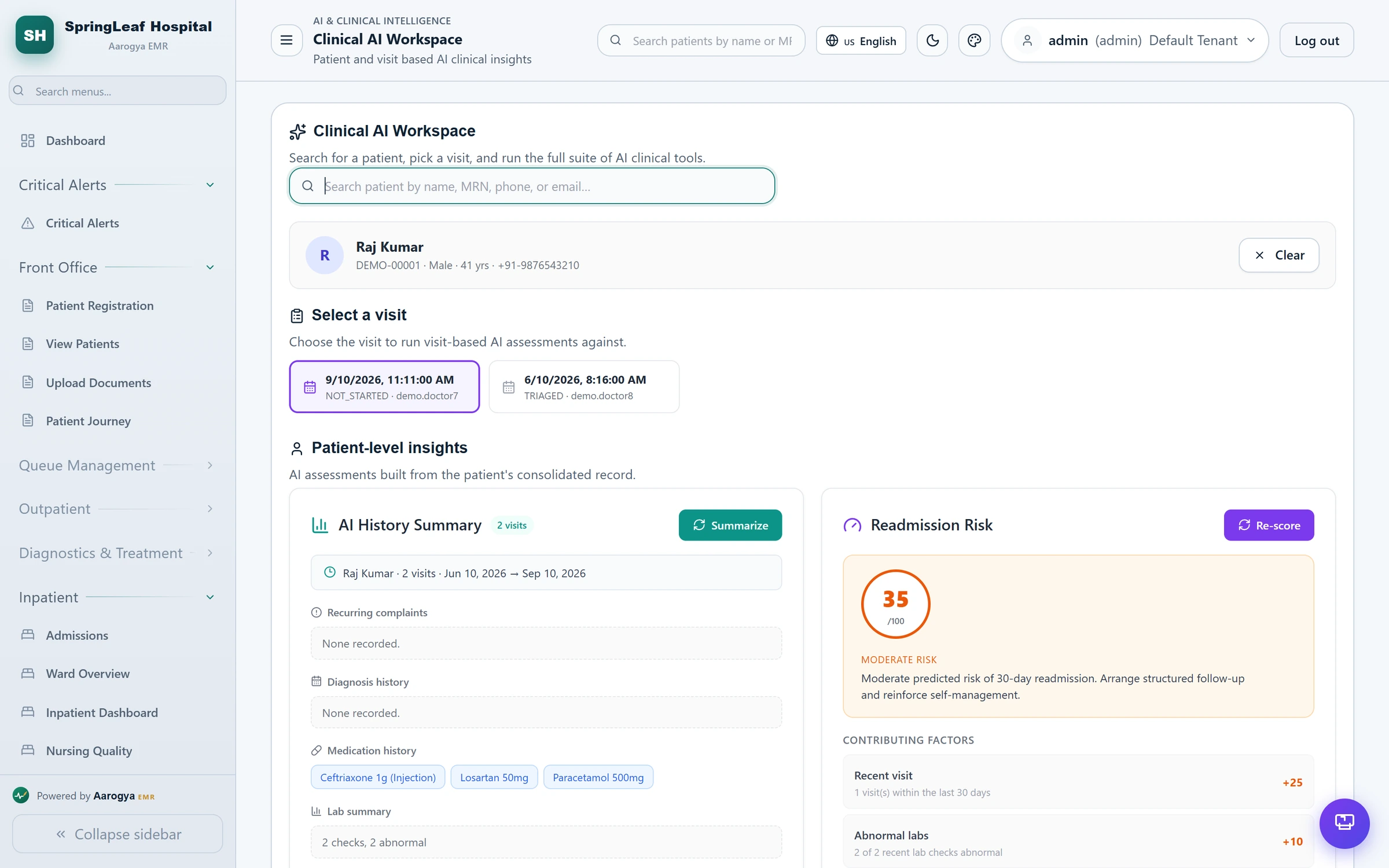
The Clinical AI Workspace today: an AI history summary and a 30-day readmission risk score with its contributing factors shown alongside it — nothing is a black box.
Aarogya EMR already catches errors before they reach the patient using deterministic, rules-based safety nets running quietly in the background. We're now layering AI-assisted intelligence on top of that foundation — not replacing it. Here's exactly what's live today and what we're actively building next.
The Clinical AI Workspace today: an AI history summary and a 30-day readmission risk score with its contributing factors shown alongside it — nothing is a black box.
These aren't machine-learning models — they're deterministic checks and structured workflows built directly into the platform. That's a feature, not a limitation: they behave the same way every single time, which is exactly what you want between a clinician and a preventable error.
ePrescribing runs interaction and allergy checks against the patient's chart before an order reaches the pharmacy.
Catches a dangerous combination before it's dispensed — not after.
Structured risk scoring feeds directly into nursing escalation workflows, so a rising score triggers a response.
Replaces an ad hoc judgment call with a consistent, repeatable score.
The OT module won't let a case move past sign-in, time-out or sign-out until that checklist step is completed.
Turns a paper habit into a system-enforced step nobody can skip under pressure.
SMS, email and in-app alerts trigger automatically off clinical and administrative events across the platform.
Nothing waits on someone remembering to make a phone call.
Claims are checked against payer and coding rules before submission, not discovered after rejection.
Catches the missing field or mismatched code before a claim is rejected weeks later.
Bed occupancy, OT utilisation and claims-pending figures roll up live instead of in an end-of-month report.
Problems surface while they're still cheap and easy to fix.
The Clinical AI Workspace scores 30-day readmission risk from a patient's consolidated record, with the contributing factors shown alongside the score.
Surfaces who needs a structured follow-up before they're back in the ED.
This is our active roadmap, not a shipped feature list — we're naming it plainly so you know exactly what to expect in a demo today versus what's coming. Every item below is designed to sit on top of the rules-based checks you already saw, not replace them.
Drafts structured clinical notes from encounter data for the physician to review, edit and sign off — not to auto-file.
Ask a natural-language question about a patient's record — "what changed in the last 24 hours" — and get pointed to the relevant entries instead of scrolling.
Extending today's readmission-risk scoring to in-stay deterioration signals, to flag risk earlier — alongside clinical judgment, not instead of it.
Flags claims likely to be rejected before submission, learned from patterns in historical claims outcomes.
Ask a question in plain language and get pointed to the relevant chart entries, instead of scrolling through months of history.